




























Ten years ago Tom Howard brokered the sale of my linen goods company, and I was just reminiscing about how happy that sale made me. I am still incredibly grateful for his expertise. It was a stressful process, and what made all the difference was Tom’s calm guidance. The sale went smoothly and successfully thanks to his knowledge, his professionalism, and his steady approach. A decade later, I appreciate it just as much as I did then.
Sell Your Manufacturing Business
Manufacturing Business Brokers & M&A Advisors
When you sell your manufacturing business, a buyer is not just paying for equipment and a building. They are paying for the customer programs you have won, the routings and tooling that let you hit tolerance and delivery dates, and the crew that knows every machine on the floor. Most of that never shows up on a balance sheet, so it has to be explained.
DealPipe’s manufacturing business brokers and M&A advisors work with machine shops, fabricators, plastics molders, contract manufacturers and makers of their own branded products. We recast earnings, document capacity and backlog, and take the company to strategic and financial buyers without revealing its name to your customers or staff.
Curious where your plant stands today? Start with a free valuation that stays between us, then decide whether to talk to buyers at all.
Why Sell Your Manufacturing Business With an Advisor
Plant owners rarely lack interest from buyers. A competitor calls, a customer hints that it would like to bring production in-house, or a private equity group sends a letter. The trouble is that each of those buyers sees only part of the picture, and the first offer usually reflects whatever risk they can find rather than what the operation can do.
We prepare the company before anyone looks at it. That means adjusted EBITDA or SDE with owner expenses and one-time costs normalized, gross margin by product line and by customer, a current equipment list with age, condition and maintenance history, and a clear view of backlog, open purchase orders and capacity utilization. Inventory, work in process and receivables are reconciled so the working capital discussion does not surprise you at the end. For a head start, review which documents needed to sell a business buyers expect to see.
With that file in hand, several qualified buyers bid at the same time. Price, cash at close, the treatment of real estate, a working capital target and your role after the sale are all negotiated while there is still competition. Advisors such as Tom Hall, whose background includes manufacturing and investment banking, help run that process.
Manufacturing Company Valuation: What Moves the Multiple
Smaller owner-run shops tend to trade on seller’s discretionary earnings (SDE), while companies with a management layer are priced on adjusted EBITDA. Asset value matters too, because buyers want to know what the equipment would cost to replace and how much goodwill sits on top of it, a topic covered in how to calculate goodwill value. These are the factors that shift price the most:
- Customer concentration. If one OEM or distributor accounts for a large share of sales, buyers discount for the chance of losing that account.
- Proprietary products versus build-to-print. Companies that own designs, patents or a recognized product line usually earn more than job shops that compete mainly on price and lead time.
- Recurring programs and backlog. Long-running part numbers, blanket orders and multi-year supply agreements make future revenue easier to underwrite.
- Equipment and capital needs. Modern, well-maintained machines with documented upkeep reduce the capital a buyer must budget after closing. Deferred maintenance does the opposite.
- Certifications and approvals. Quality systems such as ISO 9001, AS9100 for aerospace, IATF 16949 for automotive or ISO 13485 for medical devices, plus customer approvals, take years to earn and are hard to replicate.
- Workforce and management depth. Skilled machinists, programmers and a plant manager who can run the floor without the owner make the business transferable.
- Margins and cost control. Accurate job costing, low scrap and steady gross margins through material price swings show a buyer that profit is repeatable.
Manufacturing Businesses We Sell
Our team represents owners across industrial and consumer production, including:
- Precision machining and CNC job shops. Milling, turning and multi-axis work for aerospace, defense, medical, energy and industrial customers.
- Metal fabrication and welding. Sheet metal, structural steel, laser cutting, forming and finishing operations.
- Plastics and rubber. Injection molding, extrusion, thermoforming and the related tooling and secondary operations.
- Components and assemblies. Makers of parts, subassemblies, electrical components and equipment sold to OEMs.
- Contract and private label manufacturers. Companies producing food, supplements, personal care or household products for other brands.
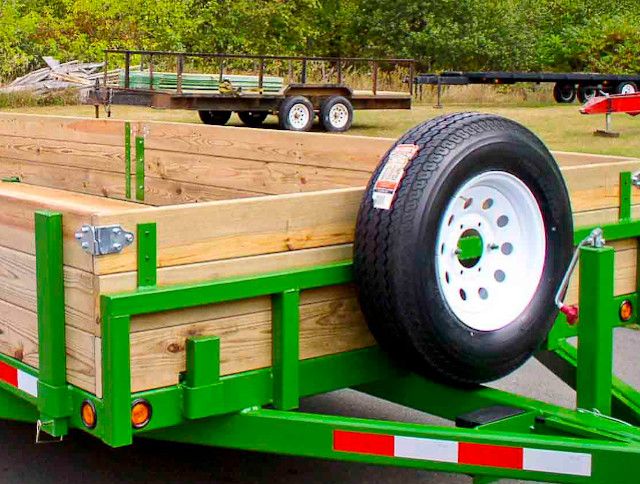
- Branded consumer product makers. Furniture, apparel, home goods, trailers and specialty products built in-house and sold wholesale, direct or online.
This page covers businesses that make what they sell. Brands that outsource production and sell mainly online fit our ecommerce business brokers better, while contractors and logistics providers each have their own specialists, and companies built around their own electronics or patented hardware are better served by our technology business brokers. Larger plants and multi-site groups are usually handled through our M&A advisory service.
What Is Your Manufacturing Business Worth?
Plug in annual sales and earnings for your plant and the calculator returns a quick, confidential estimate.
Your numbers
We value on your trailing twelve months, because that is what buyers underwrite. The prior full year sits beside it so we can read your growth. Round numbers are fine.
| Prior full yearCalendar 2025 | Trailing 12 monthsNov 2025 to Oct 2026 | |
|---|---|---|
| Revenue | ||
| less Cost of goods sold | ||
| less Operating expenses | ||
| equals Net profit | $0 | $0 |
| plus Add-backs | ||
| equals Seller’s Discretionary Earnings | $0 | $0 |
Add-backs are the expenses a new owner would not carry: your own salary, personal costs run through the business, one-time expenses, depreciation and interest. Adding them back to net profit gives SDE, the number buyers actually pay a multiple on.
What makes you valuable
0 selectedCheck everything that is true today. These are the levers that move your multiple up, and they count towards your estimate once your figures are in above.
Where the risk sits
0 selectedBe honest here. Buyers find these in diligence anyway, and knowing them up front is how we protect your price.
Your figures, and how we got this number
Get your manufacturing valuation report
You will get an estimated range, the equipment, customer and margin factors industrial buyers weigh, plus the chance to book an advisor call.
The range applies earnings multiples drawn from transactions our brokers have completed. Manufacturers with diversified customers, proprietary products, recurring programs, modern equipment and a strong second layer of management can sell above it, while heavy customer concentration, deferred maintenance, owner dependence or environmental issues can reduce value. Treat it as a starting point only. It is not an appraisal, an offer to buy or financial, legal or tax advice, and your inputs remain confidential.
Manufacturing Exit Strategy: Start 12 to 24 Months Out
Owners who come out ahead tend to start the groundwork a year or two ahead of a sale. Tighten job costing so margins can be shown by part, customer and machine. Take accurate physical inventory counts and write down obsolete stock. Keep maintenance logs for every major machine and decide which overdue repairs or replacements are worth making now. Renew key customer agreements and blanket orders where you can, and work to reduce dependence on your largest account.
Build a second layer of leadership so the plant runs when you are away, and document setups, routings and quality procedures. Keep certifications current and close out any open audit findings. Decide early whether you will sell or lease the building to the buyer, since that shapes structure and financing. If the site has a long industrial history, an environmental review is likely, so ask qualified counsel what to expect. Plan how cash and working capital will be handled at closing; our guide to handling business cash reserves during a sale explains the basics.
The Process
Valuation & Recast
Confidential Marketing
Offers & LOI
Diligence & Closing
Talk to a Manufacturing M&A Advisor
Who Buys Manufacturing Companies
Manufacturers with steady customers and skilled teams draw interest from several directions:
- Strategic acquirers. Competitors and companies in adjacent processes buy capacity, certifications, customers and people they cannot hire fast enough.
- Customers and suppliers. An OEM may buy a key supplier to secure its own supply chain, and a supplier may move downstream to capture more margin.
- Private equity platforms and add-ons. Groups building industrial platforms want add-ons with clean financials, diversified customers and managers who will stay.
- Independent sponsors and family offices. These buyers often take a longer view and can be a good fit for family-owned plants with deep community roots.
- Individual operators and search funds. Experienced engineers and managers buy smaller shops, frequently using SBA 7(a) financing alongside a seller note.
- Employees. Some owners explore a sale to managers or an employee stock ownership plan, which we can weigh against third-party offers.
Our manufacturing businesses for sale are listed anonymously, and the recently sold businesses page shows completed deals.
Our Manufacturing Business Brokers
Recently Sold Manufacturing Businesses
Selling a Manufacturing Business: FAQ
Most manufacturers sell for a multiple of adjusted EBITDA, or of owner earnings (SDE) for smaller owner-run shops. The multiple rises with diversified customers, proprietary products, recurring programs, modern equipment and capable managers, and falls with heavy concentration or deferred maintenance. Our free business valuation gives a first range before a full review.
Start with three years of financial statements, a current equipment list, inventory counts and customer sales data. An advisor recasts earnings, sets a value range, markets the company confidentially to screened buyers, negotiates the LOI and runs diligence through closing. Planning the real estate, working capital and your transition role early keeps the deal on track.
Many manufacturing sales close in roughly six to twelve months from engagement. Preparation and marketing take a few months, and diligence often runs longer than in other industries because buyers inspect equipment, review quality systems and may order environmental and quality of earnings reports. Clean records and early decisions on real estate shorten the timeline.
Selling alone usually means negotiating with one buyer who sets the terms. A manufacturing business broker prepares the financials, protects confidentiality, brings several qualified buyers to the table at once and manages diligence, which tends to improve both price and structure. Before you sign with anyone, our how to choose a business broker article is worth a read.
Working with DealPipe costs nothing upfront: our model is 100% performance-based, with no retainers. A success fee is due only when your manufacturing business sells, and the exact structure for your deal is quoted during a free, confidential consultation, and you see those terms in writing before you decide.
Buyers include competitors and companies in adjacent processes, customers or suppliers seeking vertical integration, private equity platforms adding to industrial groups, family offices, search funds and experienced individuals using SBA financing. Strategic buyers often value capacity and certifications most, while financial buyers focus on stable earnings, diversified customers and a management team that stays.
The roles overlap. Business brokers typically handle smaller, owner-operated companies and broad buyer outreach, while mergers and acquisitions advisors run structured auctions for larger companies with deeper diligence. DealPipe offers both, so a ten-person shop and a multi-site plant each get a process sized to the deal. Our mergers and acquisitions advisory page explains the process.
We market the company with a blind profile that hides your name and location, and each buyer signs a nondisclosure agreement and proves funding before learning more. Plant tours are scheduled after hours or framed as routine visits, and customer and key employee conversations happen late in the process, usually with your approval and a plan in place.
Machinery and equipment are normally part of the enterprise value. Inventory is usually handled through a working capital target set in the purchase agreement, so the buyer receives a normal level at closing. Real estate is often treated separately: you can sell the building with the business or keep it and lease it to the buyer.
More Industries We Serve